
June 03, 2026
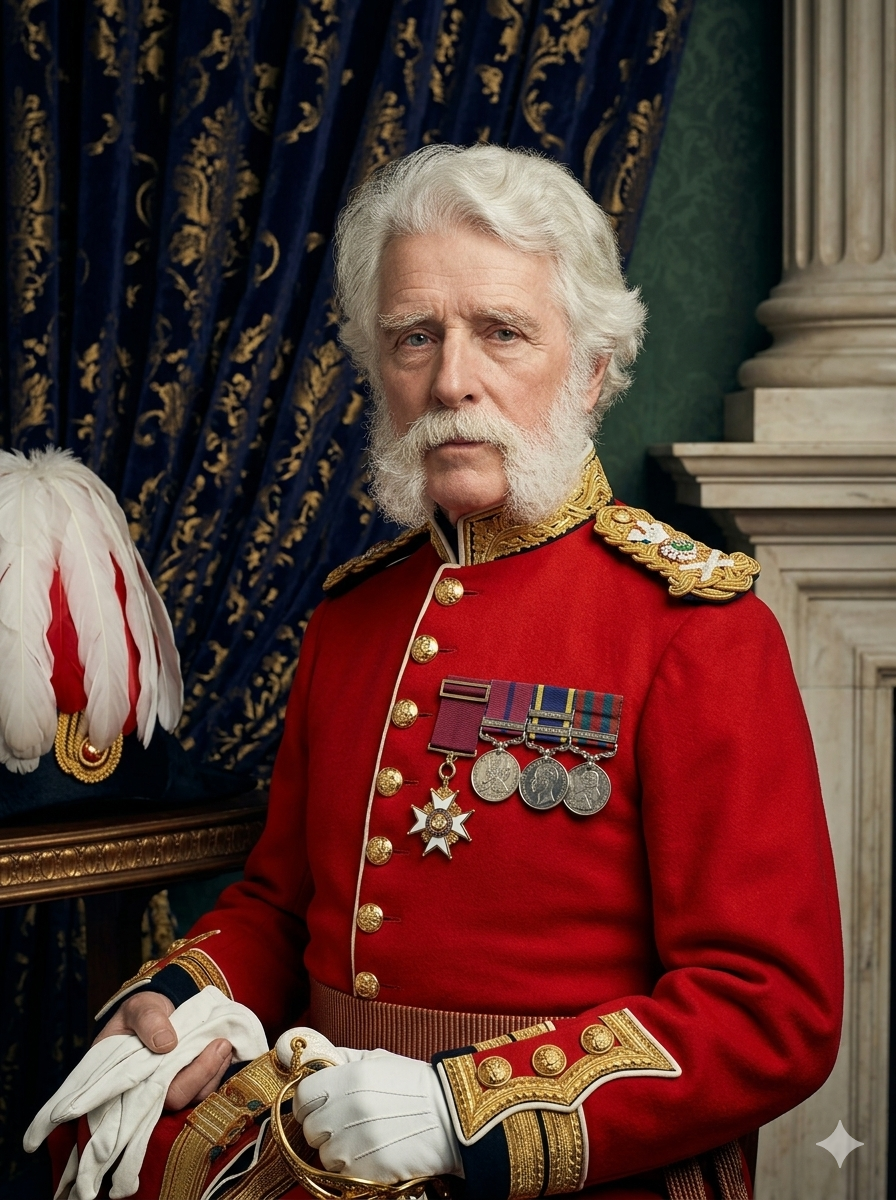
In the annals of British India, few figures evoke as much admiration and enduring legacy as General Sir James Abbott. An intrepid Indian Army officer, diplomat, and administrator, Abbott's name is inextricably linked to the picturesque city of Abbottabad in Pakistan's Hazara region. Yet, his story offers more than just the founding of a town; it provides a compelling lens through which to examine the internal contradictions, administrative challenges, and eventual decline of the mighty East India Company.
Born in 1807, James Abbott embarked on a distinguished military career with the Bengal Artillery, a branch of the East India Company's formidable army. His early service saw him participate in critical campaigns, including the First Anglo-Afghan War, where his strategic acumen and bravery were first tested. However, it was his extraordinary journey to Khiva in Central Asia in 1840, an epic and perilous diplomatic mission, that truly cemented his reputation as a man of courage and resourcefulness. Tasked with mediating a prisoner exchange and establishing trade relations, Abbott traversed harsh landscapes and faced grave dangers, demonstrating a remarkable blend of resilience and diplomatic finesse. This early experience honed his ability to interact with diverse cultures and navigate complex political landscapes, skills that would prove invaluable in his later postings.
James Abbott's most celebrated chapter began in 1849 when, as a Major, he was appointed the first Deputy Commissioner of Hazara. This mountainous region, home to a predominantly Hindko-speaking population and various tribal communities, had a history of resistance and was considered a challenging frontier. The annexation of Punjab had just brought Hazara under the East India Company's sway, and the task of establishing stable administration fell to Abbott.
Unlike many of his contemporaries who relied on brute force and strict adherence to colonial directives, Abbott adopted a remarkably humane and respectful approach. He immersed himself in the local culture, learned local languages, and, crucially, earned the trust and affection of the Hazara people. His policies prioritized justice, fairness, and the protection of local customs, often mediating disputes with a personal touch rather than through rigid legal frameworks. This benevolent governance fostered an environment of peace and cooperation, transforming a volatile region into a model of stable administration.
It was in recognition of his profound impact and the deep affection he garnered that the local populace insisted on naming the new administrative headquarters after him. Thus, in 1853, the 'City of Abbottabad' was founded, a lasting tribute to a man who truly connected with the land and its people. His love for the region was so profound that he penned the famous 'Abbottabad town poem,' a poignant reflection of his "sweet memories" of this "beautiful land, nature's heaven." This deep affiliation with Abbottabad remains a cornerstone of the city's identity.

A watercolour of Rock Aornos from Huzara, Abbott, Sir James (1807-1896) On original mount: 'The Rock Aornos from Hazara' 1850 - 1867 Illustrated by Sir James Abbott.
Abbott's administrative philosophy stood in stark contrast to many of the East India Company's prevailing policies. The Company, driven primarily by commercial interests and territorial expansion, often employed aggressive annexation strategies, such as the infamous 'Doctrine of Lapse' and the imposition of 'subsidiary alliances.' These policies frequently disregarded local autonomy, exploited resources, and bred widespread resentment among Indian princely states and populations.
James Abbott, however, consistently advocated for a more ethical and less interventionist approach. He believed in winning loyalty through good governance and respect, rather than coercion. His success in Hazara proved that a benevolent administration could be more effective and sustainable than the Company's often heavy-handed methods. He was known to voice concerns about the potentially destabilizing effects of the Company's avaricious policies, recognizing that such actions sowed the seeds of rebellion.
While Abbott's administrative style did not directly *cause* the fall of the East India Company, his story vividly illustrates the very tensions and contradictions that ultimately led to its demise. The Company's inability or unwillingness to adopt more equitable and respectful policies across its vast territories generated immense discontent, culminating in the Indian Rebellion of 1857. This monumental uprising, fueled by years of resentment against EIC rule, shattered the Company's authority and directly led to its dissolution in 1858, with the British Crown assuming direct control of India.
Abbott's success in Hazara served as a powerful counter-narrative, demonstrating what could have been achieved through empathy and genuine partnership. His approach highlighted the administrative failures and moral shortcomings of the East India Company, whose focus on profit often overshadowed its responsibilities towards the governed. In a sense, Abbott represented the best of British colonial administration, a stark contrast to the exploitative practices that precipitated the Company's downfall.
After his distinguished service in India, James Abbott retired as a General Sir, but his legacy in the subcontinent, particularly in Hazara and the city of Abbottabad, remained indelible. His house in Abbottabad stands as a testament to his time there, a physical reminder of his deep connection to the land. The city itself, with its pleasant climate and strategic location, flourished under his foundational principles of order and community.
General Sir James Abbott's story is a compelling reminder that even within the complex and often controversial history of colonial rule, individuals can forge paths of humanity and respect. His affiliation with Abbottabad is not merely historical; it is a cultural touchstone, representing an ideal of governance that prioritized the welfare and trust of the people. His life offers valuable insights into the administrative challenges of the 19th century, the nuanced role of an Indian army officer, and the internal dynamics that ultimately contributed to the East India Company's transition from a mercantile empire to a historical footnote, replaced by the direct rule of the British Raj.

June 10, 2026


June 06, 2026

June 05, 2026